

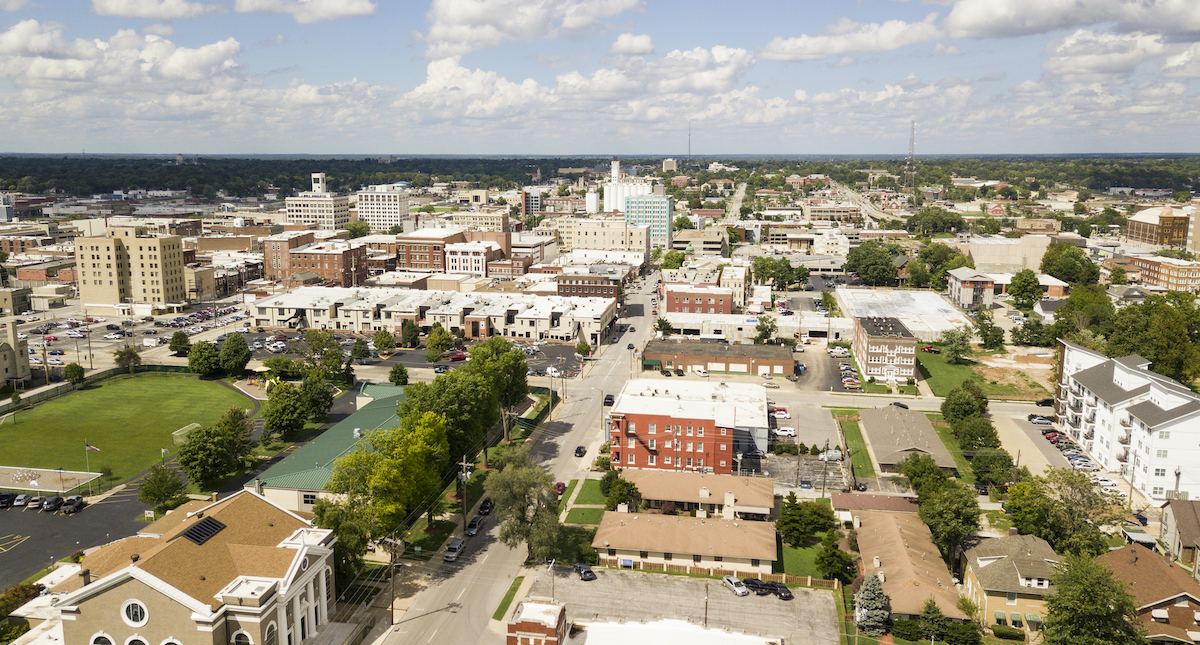
As Springfield grows, housing demand is shifting across job centers, neighborhoods, commute routes, and nearby communities.
Springfield’s growth is becoming part of the local housing conversation.
More development activity, busier corridors, new business investment, and steady population gains are changing how people think about where they live. Buyers are comparing commute routes, nearby employers, school access, and price points across Springfield and surrounding communities. Sellers are watching those same patterns as they consider timing, pricing, and what their home may offer in a changing market.
In Springfield, MO real estate, that growth is shaping where buyers look, how sellers think about timing, and which homes get attention. What was once viewed primarily as a regional hub is attracting broader interest across Southwest Missouri.
Table of Contents
SPRINGFIELD POPULATION NOW PAST HALF A MILLION
Population estimates cited by the Springfield Area Chamber of Commerce reveal that the Springfield Metropolitan Statistical Area reached 500,694 residents in July 2025, adding more than 25,000 residents to the region in a span of five years.
The city itself is much smaller than the full metro area, with Springfield’s population estimated at around 200,000 (2025). That gap matters because much of the housing demand does not stop at the city line. People may work in Springfield, shop in Springfield, or use Springfield medical services, then search for a home in Nixa, Ozark, Republic, Willard, Strafford, or Rogersville.
For economic development, this 500,000 benchmark changes how outsiders evaluate the region. Site consultants and corporate real estate professionals often use metro population as a filter when reviewing locations. Crossing that threshold essentially puts Springfield in front of decision-makers who may have skipped over the region before.
WHERE GROWTH IS HAPPENING

Healthcare is Springfield’s largest employment sector, anchoring the regional economy and influencing housing demand near major medical employers.
Housing demand shifts as people’s jobs, routines, and lifestyle priorities shape where they choose to live.
Healthcare drives demand
Springfield’s economy has long been anchored by major medical employers, hospitals, clinics, and specialty care facilities. Health care and professional services are major sectors that tend to grow as the population grows, because a larger region needs more care, more office support, and more specialized services.
That can influence buyer interest near major corridors, especially around the Medical Mile, south Springfield, and areas with easier access to CoxHealth, Mercy, and related offices. A buyer who works a hospital shift may care about drive time in a very different way than someone working from home three days a week. Same city, different search.
Education shapes housing choices
Missouri State University, Ozarks Technical Community College, Drury University, and other academic institutions bring students, faculty, staff, renters, first-time buyers, and investors into the housing picture. Areas near major campuses often see different housing needs and buying patterns than other parts of Springfield, creating a distinct source of demand within the broader market.
Lifestyle and convenience matter
Then there are the everyday pieces: groceries, parks, restaurants, schools, trails, and the roads people actually use. A frozen custard run may not be the reason someone buys a house, but those weekly stops and routines do shape how manageable a neighborhood feels once life gets busy.
PLANNING FOR MORE PEOPLE
Forward SGF, the city’s comprehensive plan, was created to guide growth and development over the next two decades. Its housing-related priorities include neighborhood planning, corridor improvements, trail connections, expansion and annexation planning, and neighborhood commercial hubs that place small-scale businesses and services closer to where people live.
That matters for housing because demand can move in several directions at once. Some buyers look outward for larger lots or newer subdivisions. Others look closer to Downtown, the MSU area, older neighborhoods, or commercial corridors where apartments, townhomes, mixed-use projects, and daily services may be easier to support.
Housing variety will keep coming up as Springfield grows. Springfield needs single-family homes, but it also needs options for renters, downsizers, young professionals, students, and workers who want to live closer to jobs or services. More apartments or townhomes in the right places should take pressure off some parts of the market. Existing single-family homes still matter for buyers who want yards, garages, storage, and an established neighborhood.
New housing should help with supply, but location, parking, traffic, design, and neighborhood fit still matter. As Springfield grows, finding the right balance between new housing options and established neighborhoods will remain an important part of the conversation.
WHAT BUYERS WANT

Springfield buyers are comparing location, price, commute routes, and everyday convenience as the region grows.
As Springfield grows, buyers are looking beyond square footage. Bedrooms and bathrooms still matter, but so do commute routes, nearby employers, schools, errands, and how a home fits into a normal week.
Many buyers are comparing
- Access to hospitals, universities, and major employers.
- Drive times to U.S. 65, James River Freeway, Sunshine Street, and Glenstone Avenue.
- Nearby grocery stores, parks, trails, and schools.
- Space for remote or hybrid work.
- Whether moving farther out brings more room or a better price point.
Affordability is still part of the decision. Home values in the Springfield metro remain more accessible than those in many larger metropolitan areas, but buyers are still weighing mortgage rates, insurance costs, maintenance expenses, and overall monthly affordability. Those financial considerations often influence the tradeoffs buyers make. Some may choose a smaller home closer to work, while others look toward Ozark, Nixa, Republic, Rogersville, or Willard for more space, a larger lot, or a different price point.
WHAT SELLERS SHOULD KNOW
Location, condition, recent comparable sales, competing listings, and buyer demand all matter more than the general idea that Springfield is growing.
Buyer priorities may vary depending on location and lifestyle needs. A house near MSU or Downtown may attract different questions than a south Springfield home near established schools and medical access.
If you are preparing to sell your home, Springfield’s expansion helps explain where buyer interest is building. Sellers still need to look at updates, layout, maintenance, storage, likely repair concerns, and the cost of the next move.
Timing matters, too, especially for homeowners who plan to sell and buy in the same market. Low inventory tends to make the next home harder to find, so proceeds, pricing, and planning should be reviewed together before listing.
LAURA’S LOCAL PERSPECTIVE
Growth data is helpful, but it only goes so far. A metro population number doesn’t tell a seller how buyers will respond to a specific floor plan, whether a repair is worth making before listing, or how one Springfield neighborhood may compare with another.
That is where local context matters. Experienced Realtors in Springfield, MO can connect the larger growth story to pricing, preparation, timing, buyer demand, and expected net proceeds.
At Flat Fee Redefined, we look at the numbers and the real-life details: weekday drives, nearby employers, school routines, buyer priorities, and what makes one home stand out from the next. Our approach is built around full-service support, steady communication, and practical problem-solving with a flat listing-side fee.
Springfield’s growth may be regional, but the decisions are still property-specific. The right plan comes back to the home, the numbers, and the seller’s next move.
FAQs
How is Springfield’s growth affecting housing demand?
Springfield’s growth is increasing demand near job centers, medical corridors, schools, retail areas, and convenient commute routes. It’s also affecting nearby communities as buyers compare price, space, and access across the region.
Why does the Springfield MSA half-million population benchmark matter?
This milestone can increase Springfield’s visibility with site consultants, employers, investors, and corporate real estate decision-makers. Over time, that can support job growth, infrastructure investment, and housing demand.
Is Springfield, MO real estate still affordable for buyers?
Springfield remains more affordable than many larger metros, but buyers still have to account for mortgage rates, insurance, repairs, and monthly payment comfort. Well-priced homes in practical locations may still attract attention quickly.
MAKE SPRINGFIELD’S GROWTH PART OF YOUR SELLING PLAN
Springfield, MO is growing, and that growth can affect how buyers search, what they value, and how sellers prepare. At Flat Fee Redefined, we help homeowners look at the numbers, understand local demand, and decide what makes sense before listing.
If you are thinking about selling, call 417.520.6545 or email us to start the conversation.